
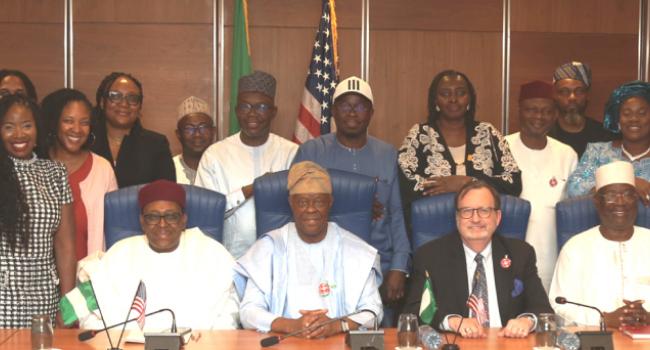
In a major diplomatic and health sector development, the Federal Government of Nigeria has signed a five-year, $5.1 billion bilateral health cooperation agreement with the United States Government, aimed at strengthening Nigeria’s healthcare system, expanding access to essential services, and deepening long-term health collaboration between the two nations. (Businessday NG)
A Historic Health Partnership
The agreement, formalized through a Memorandum of Understanding (MoU) signed in December 2025, sets out a strategic five-year framework for cooperation between Nigeria and the United States. Under the pact, the U.S. government is expected to provide nearly $2 billion in grant funding to support priority health services, while the Nigerian government has committed to investing about $3 billion in domestic health expenditures over the same period. (Africanews)
According to Nigerian and U.S. officials, this cooperation marks one of the most important health partnerships between the two countries in recent years. It builds on ongoing efforts to improve health outcomes, strengthen health systems, and promote sustainable disease prevention and treatment. (EATG)
Focus on Key Health Priorities
The agreement will support a wide range of critical healthcare services, including:
- Prevention and treatment of infectious diseases such as HIV/AIDS, tuberculosis (TB), malaria, and polio. (EATG)
- Maternal and child health initiatives, aiming to reduce maternal and infant mortality. (EATG)
- Strengthening health security and disease surveillance systems, including laboratory and outbreak response capabilities. (Nigeria Health Watch)
- Support for frontline health workers and essential health infrastructure. (Nigeria Health Watch)
Officials say the partnership will help Nigeria build resilient and more self-reliant health systems while increasing access to quality health services for millions of Nigerians. (Africanews)
A Strategic Global Health Move
U.S. diplomats describe the MoU as part of a broader effort to strengthen global public health cooperation under updated foreign policy frameworks. Nigeria is among several African countries that have signed similar health cooperation agreements with the United States in recent months. (EATG)
The pact reflects a renewed focus on health diplomacy, especially after changes to traditional aid programs like USAID. It aims to ensure that investments yield sustainable impact by balancing external support with increased domestic health financing by partner countries such as Nigeria. (Africanews)
Mixed Reactions and Calls for Transparency
While many government officials and health experts have welcomed the MoU as a boost for the Nigerian healthcare system, some political voices have expressed concerns regarding how parts of the agreement are framed. Critics highlight differences in how Nigerian and U.S. officials described the partnership—especially around whether certain resources might be directed toward specific faith-based providers—and have called for greater transparency around the exact terms of the pact. (Businessday NG)
The debate underscores the importance of clear communication and inclusive planning in international agreements that affect public services and national health priorities.
What This Means for Nigerians
For ordinary Nigerians, this partnership promises to improve access to healthcare services, strengthen disease surveillance and response systems, and support preventive health programs across communities. If effectively implemented, the pact could significantly advance progress toward universal health coverage and tackle persistent health challenges in the country.
In Summary:
Nigeria’s groundbreaking multi-billion-dollar health cooperation agreement with the United States is a major diplomatic and public health milestone that could reshape the nation’s health landscape over the next five years — while also sparking important conversations about policy, national priorities, and international cooperation. (Africanews)

Leave a comment
Your email address will not be published. Required fields are marked *